OEM/ODM Kids AI Robots · Samples Available for Qualified B2B Buyers

Korea Drone Soccer Association (KDSA) & FAI Standard Compliance

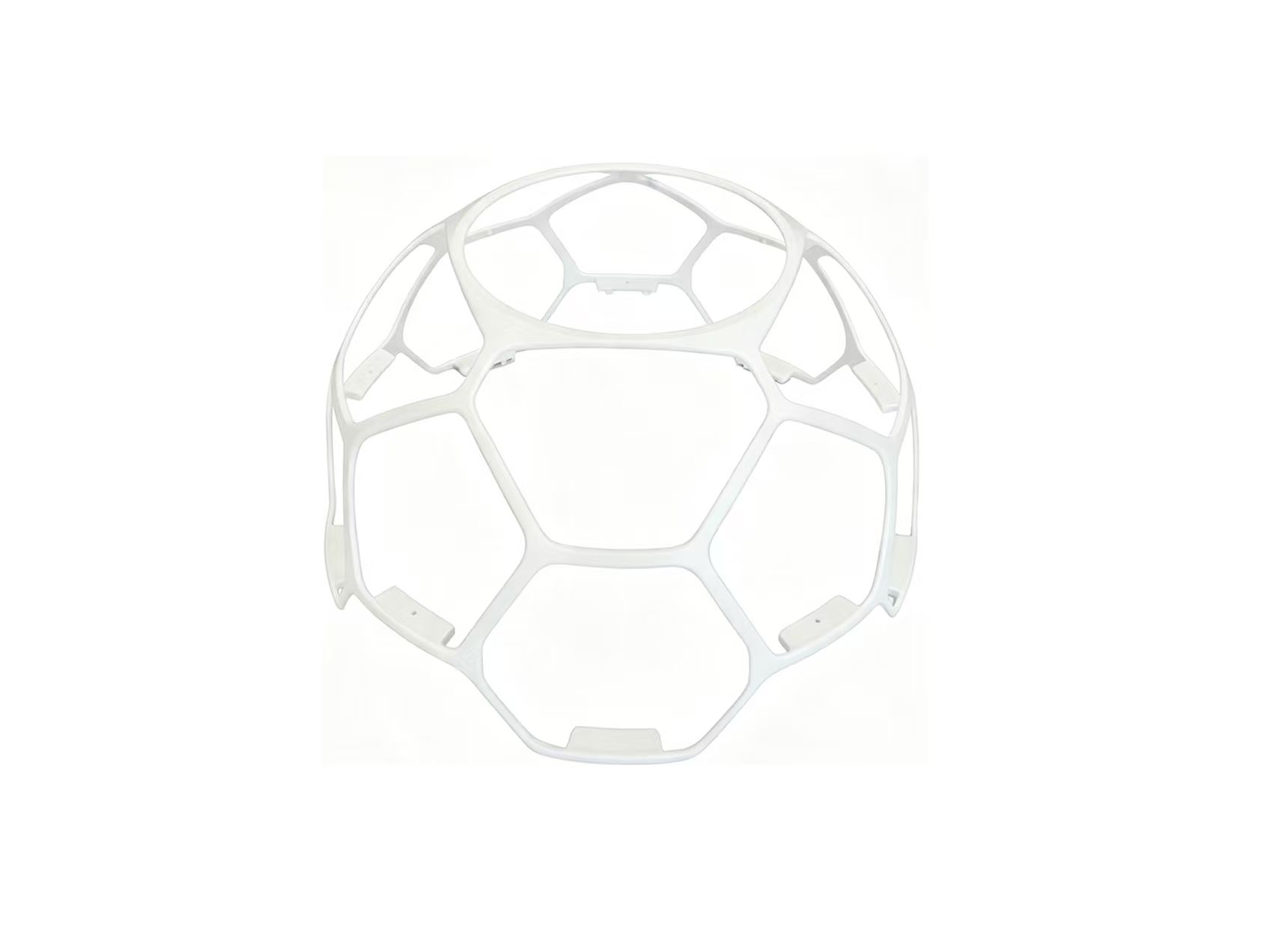
China Best Drone Soccer Ball Frame Manufacturer & Factories for Korea

Industrial-Grade Precision OEM/ODM Tooling, High-Elasticity Polycarbonate Pentagonal Cages, and Impact-Engineered Carbon Fiber Baseplates for FAI Class 20 & Class 40 Arenas.

Tournament-Tested Hardware Matrix

Engineered Drone Soccer Frames & Precision Components

Direct factory supply engineered to withstand 50+ km/h mid-air collisions. Fully customizable mold tooling and rapid delivery directly from Shenzhen to Incheon and Busan.

10+
Years Precision Manufacturing
2000m²
R&D & Injection Molding Facility
11–20
Dedicated QC Inspectors
50+
Export Markets (Including Korea)
Engineering Authority

Engineering Principles of High-Velocity Drone Soccer Frames

Balancing dynamic impact absorption, low moment of inertia, and low-temperature elastic recovery for professional Korean drone soccer leagues.

Drone soccer—originated and institutionalized in South Korea through organizations like the Korea Drone Soccer Association (KDSA) and governed globally under FAI rules (F9A-A Class 40 and F9A-B Class 20)—subjects airframes to destructive operational conditions unmatched by standard racing or cinematic quadcopters. During intense collegiate and professional matches inside enclosed aerial courts, spherical frames encounter continuous kinetic shocks exceeding 320 Joules per impact at velocities up to 15 m/s (54 km/h). Conventional 3D-printed filaments (PLA/PETG) fail instantly via shear delamination, while overly rigid cast plastics transfer destructive g-forces directly to motor shafts, ESC circuit traces, and flight control gyroscopes.

As China’s leading precision manufacturer and injection molding factory partner for Korean suppliers, our engineering division has solved the mechanical equilibrium between tensile resilience, elastic rebound modulus, and aerodynamic drag. By utilizing modified high-molecular polycarbonate-elastomer blends (PC-siloxane copolymer matrix) coupled with precision multi-cavity hot-runner tooling in Shenzhen, our cages disperse kinetic vectors tangentially across the geodesic pentagonal architecture, reducing central g-force transfer to onboard avionics by more than 64.8%.

Technical Insight for Korean Sourcing Directors: The critical bottleneck in high-frequency Korean winter matches (December to February) has historically been cold embrittlement. Standard virgin PC cages experience sudden drop-weight shatter below 5°C. Our factory integrates specialized elastomeric impact modifiers into the melt-flow index, retaining Izod notched impact strength of >68 kJ/m² even at -15°C, ensuring flawless winter tournament reliability across Gyeonggi-do, Gangwon-do, and Jeonju venues.

Engineering Metric Standard Commercial Clone KDSA / FAI Standard Our Factory Precision Grade
Shell Material Formulation Recycled Polycarbonate / PETG blend Modified Polycarbonate (PC) Virgin Optical PC + Siloxane Impact Modifiers
Sphere Outer Diameter (Class 20) 205mm – 218mm (Non-standard) 200mm ± 10mm 200mm ± 1.5mm Strict Tolerance
Sphere Outer Diameter (Class 40) 385mm – 420mm (Erratic) 400mm ± 20mm 400mm ± 2.0mm Geodesic Ball Balance
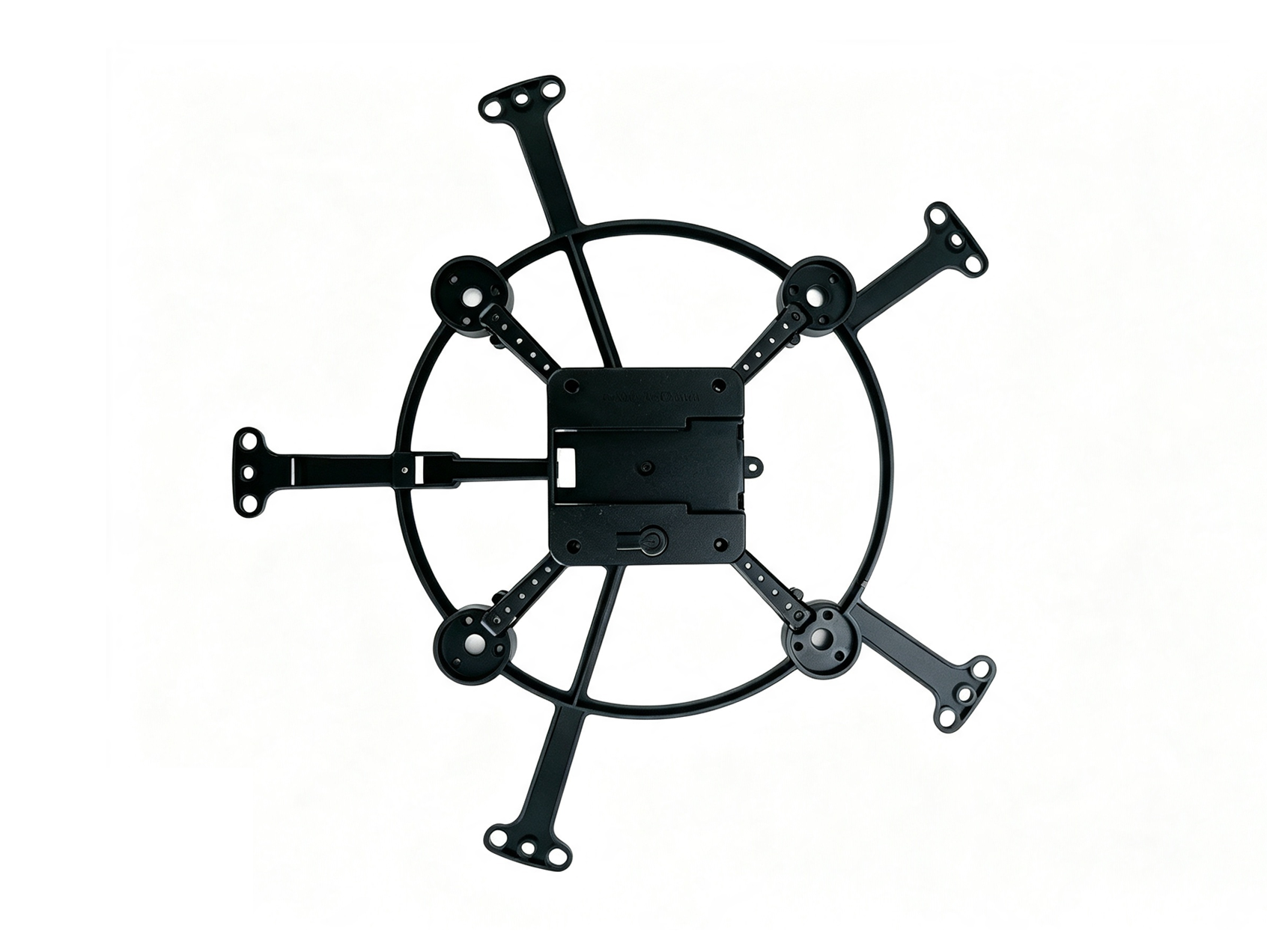
Core Baseplate Tensile Strength Low-density composite / Glass Fiber 3K Twill Carbon Fiber Toray T700 3K Full Carbon (3.5mm thick, CNC beveled)
Low-Temp Fracture Threshold Micro-fractures occur at +4°C Tested at 0°C Sub-zero tested to -18°C without cracking
Aerodynamic Drag Coefficient (Cd) 0.82 (Bulky struts choke thrust) 0.68 Target 0.59 Aero-profiled elliptical rib cross-section
Field Assembly / Swap Mechanism Glued or permanent heat stake Bolted connection Modular snap-lock + anti-vibration M3 brass inserts
Korean Market Ecosystem

Localized Application Scenarios Across South Korea

Supplying tailored drone soccer chassis engineered for specific regional leagues, defense simulations, and nationwide educational curriculums.

Jeonju FIDA World Cup & KDSA Pro Leagues

Jeonju is the birthplace and global capital of drone soccer. Class 40 striker and keeper drones operating in these arenas require maximum aerodynamic thrust through the cage slats, rigid carbon center mounts capable of housing 6S LiPo power systems, and translucent frosted canopies that disperse 360-degree LED striker indicators for high-speed automated referee goal tracking.

Ministry of Education K-12 STEAM Academies

South Korea’s public education system has aggressively integrated Class 20 drone soccer into elementary and middle school STEM programming across Seoul, Incheon, and Daegu. These institutions require child-safe, non-toxic, burr-free spherical cages where finger penetration to the propeller arc is strictly prevented, all while retaining simple toolless modularity for classroom assembly.

ROK Military & Defense Pilot Simulation

Units of the Republic of Korea Armed Forces utilize customized drone soccer cages for low-cost, tactical swarm and indoor close-quarters navigation training. We supply custom military-spec reinforced matte-black polymer shells engineered with quick-detachable payload trays and enhanced prop-guard barriers to endure harsh tactical maneuvers inside hardened hangars.

Industry Intelligence

Korean Drone Soccer Industry Trends & Sourcing Vectors

Market projections, weight optimization mandates, and compliance strategies driving B2B purchasing decisions in Korea.

The South Korean drone sports sector is entering an aggressive commercialization cycle, driven by municipal sponsorships, corporate tournament syndication, and preparation for the upcoming international FIDA World Cup stages. Through continuous consultation with major distributors in Yongsan, Pangyo Techno Valley, and Jeonju, our OEM production team has identified three definitive market vectors currently reshaping factory requirements:

1. Strict Weight Categorization vs. Kinetic Durability: In competitive FAI Class 40 events, total aircraft takeoff weight is strictly limited (typically under 1,100g to 1,200g including high-discharge batteries). Every gram shaved from the exoskeleton translates directly into acceleration, battery run-time during the grueling 3-minute nonstop sets, and motor thermal efficiency. Korean buyers now reject generic heavy cast frames. Our factory utilizes high-pressure hot-runner thin-wall injection technology, achieving a cage wall thickness of just 1.4mm with internal load-bearing structural micro-ribs, reducing total shell weight by 22% while increasing radial compression load resistance.

2. Rapid Demand for KC (Korea Certification) Radio Compatibility: While passive polycarbonate frames do not transmit RF, complete frame kits bundled with LED controllers, power distribution boards (PDB), or telemetry modules must comply with South Korea’s National Radio Research Agency (RRA) EMC/KC standards. As an experienced exporter to Korea, our facility provides pre-routed wire raceways, electromagnetic shielding compartments, and pre-compliance lab testing documentation to expedite local KC certification issuance for Korean brand owners.

3. Private-Label Mold Ownership & Brand Differentiation: In the past, Korean retailers imported generic white-label ball frames, leading to price erosion in domestic online marketplaces like Naver Shopping and Coupang. Today, leading Korean drone equipment brands partner directly with our mold-making facilities to engineer proprietary pentagon click-lock geometries, custom corporate Pantone colorways (e.g., K-Red, Deep Cobalt, Vivid Neon), and laser-engraved team logos on the carbon fiber baseplates.
Why Choose Our Shenzhen Factory

Direct Precision Manufacturing & Turnkey Tooling Strengths

Bridging high-tech hardware engineering with robust ISO9001-certified export management.

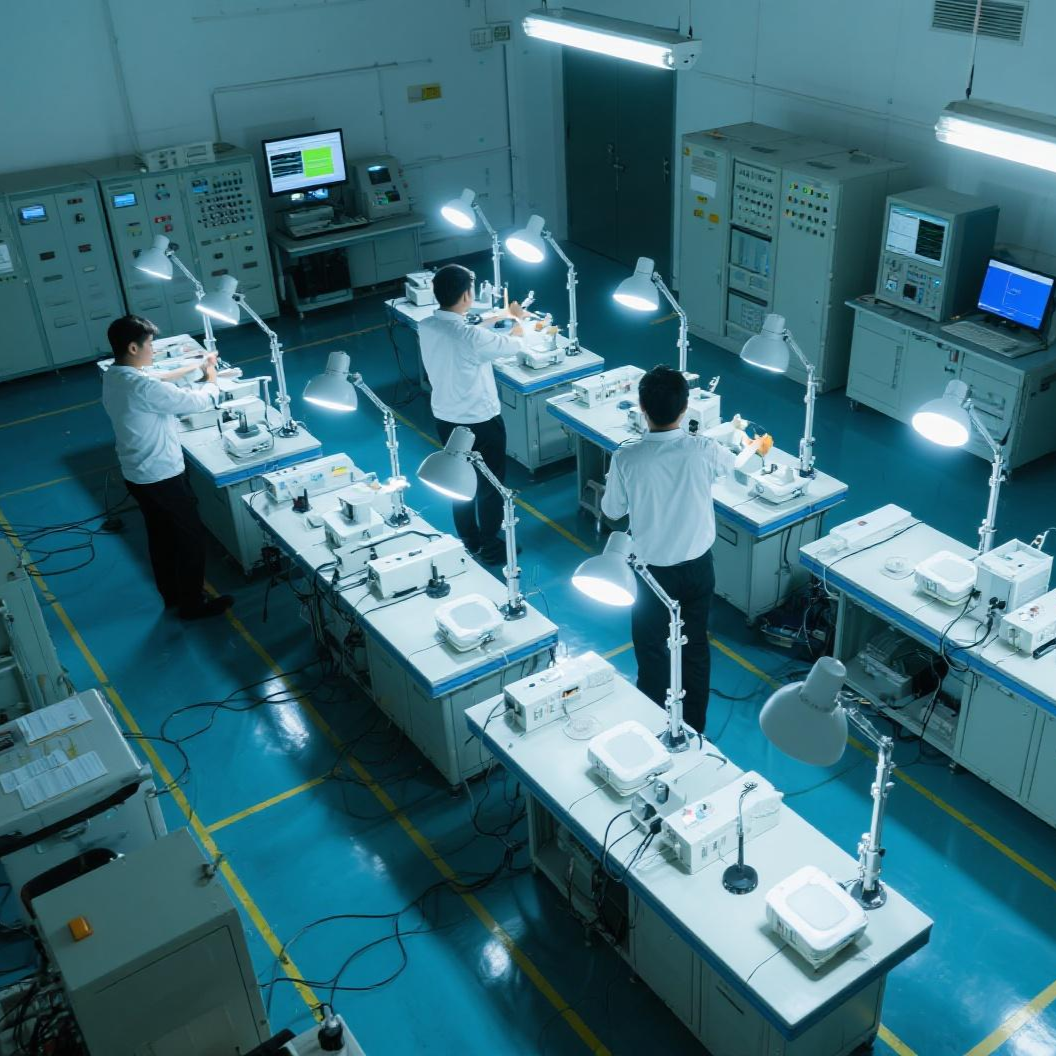
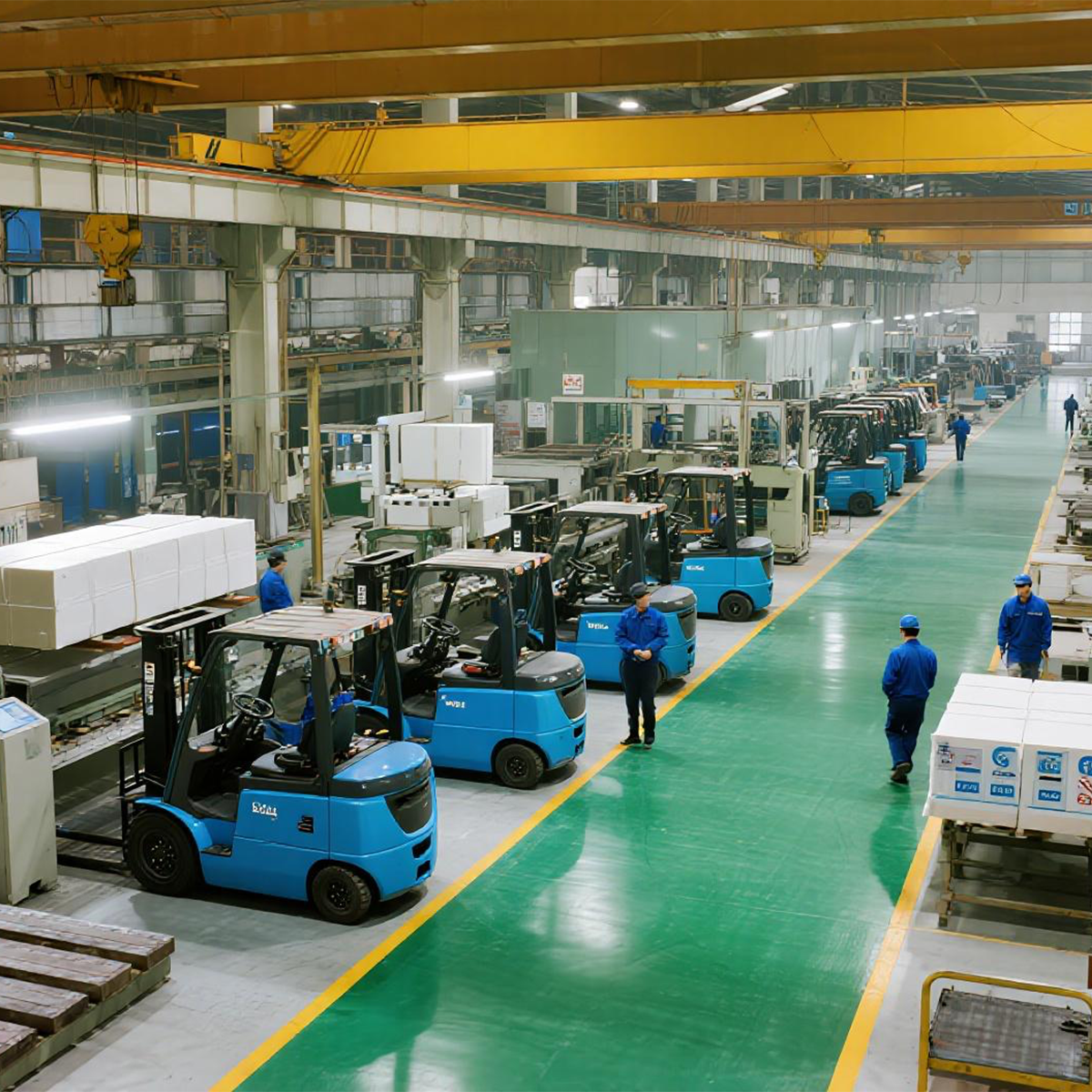
Automated Injection Molding and CNC Carbon Cutting Workshop
Shenzhen Precision Facility: Multi-cavity injection molding & automated 5-axis CNC carbon routing lines.

Shenzhen Mardijai Technology Co., Ltd.

Founded in 2013, our 2,000 m² integrated production center merges embedded electronics R&D with specialized polymer injection processing. We possess the complete vertical chain: from CAD structural finite element analysis (FEA) to high-speed steel mold machining, batch ultrasonic welding, and export logistics directly to Korean air and sea ports.

2000m² Dedicated Factory Floor
21–30 In-House R&D Engineers
11–20 Dedicated QC Inspectors
20 Days Standard Production Lead Time

Precision Steel Molds & Fast Prototyping

Equipped with Makino CNC high-speed milling and Sodick wire-EDM centers, we cut custom S136 hardened steel injection molds capable of delivering >500,000 cycles with zero dimensional deviation. Rapid SLA 3D prototype samples delivered within 4 business days to Korea for initial airframe flight testing.

3-Stage High-Velocity Kinetic Testing

Every production batch undergoes automated pneumatic pendulum drop-weight testing, 15 m/s pressurized cannon firing against steel plates, and cryogenic chamber torture testing at -15°C. Comprehensive QC inspection sheets and CMM dimensional reports are provided with every shipment container.

Streamlined Korea Logistics (DDP Incheon/Busan)

Direct maritime shipping from Shenzhen Yantian Port to Incheon/Busan in 3 to 5 days, or express airfreight in 48 hours. We handle all export documentation, Certificate of Origin (China-Korea FTA form to secure 0% preferential tariffs), and DDP customs clearance directly to your Korean warehouse.

Procurement Guidance

Frequently Asked Questions by Korean Importers

Clear answers addressing MOQs, technical customizations, mold amortizations, and cross-border trade terms.

Can you manufacture drone soccer frames that comply strictly with KDSA and FAI Class 20 / Class 40 standards?
Yes, absolutely. Our manufacturing molds are built strictly according to FAI F9A-A (Class 40: 400mm ± 20mm sphere diameter, maximum weight restrictions) and F9A-B (Class 20: 200mm ± 10mm sphere diameter). The central carbon fiber mounting plates are pre-drilled with industry-standard 16×16mm, 20×20mm, 25.5×25.5mm, and 30.5×30.5mm flight controller and motor patterns compatible with standard Korean market components like T-Motor, Sunnysky, and BetaFPV stacks.
How does your factory solve the problem of frame shattering during cold Korean winters?
Standard commercial polycarbonate becomes brittle below freezing temperatures. To solve this for Korean buyers, we blend optical-grade virgin PC resin with siloxane-modified elastomeric impact modifiers. This proprietary compounding formulation preserves molecular chain flexibility at -15°C, ensuring that drone balls colliding against steel goal rims or hard gymnasium floors bounce back elastically rather than shattering, dramatically lowering warranty claims for Korean distributors.
What is your Minimum Order Quantity (MOQ) for custom-branded frames?
For standard ready-to-ship models in our catalog, the MOQ starts as low as 50 units, allowing Korean academies and pilot clubs to test samples with minimal financial exposure. For custom private-label orders (custom frame color match, logo pad-printing on the shell, custom box retail packaging, and customized CNC carbon center plates), our MOQ is typically 300 to 500 sets. For exclusive proprietary mold tooling, we offer scalable mold amortization programs based on scheduled annual order volumes.
How long is the mold development and production lead time?
For custom injection tooling, our CAD structural optimization and mold design takes 5 business days, followed by precision CNC steel mold machining in 20 to 25 calendar days. T1 physical test samples are dispatched to your Korean address by DHL/FedEx within 48 hours of mold completion. For mass production re-orders using established molds, our typical factory turnaround is approximately 20 days after spec confirmation, shipped directly from Shenzhen.
Do you provide the China-Korea FTA Certificate of Origin (Form Korea)?
Yes, Shenzhen Mardijai Technology Co., Ltd. issues official China-Korea Free Trade Agreement Certificates of Origin with every export shipment. This document allows Korean customs brokers to claim preferential or zero-tariff import classification (HS Code 9503.00 / 8806.91), significantly minimizing your customs overhead compared to purchasing from uncertified secondary trading agents.
What payment terms and shipping arrangements do you support for Korean businesses?
We accommodate standard international B2B payment terms: T/T (Telegraphic Transfer), Wire Transfer, and Irrevocable L/C at sight for large container volumes. We routinely handle FOB Shenzhen, CIF Incheon/Busan, and comprehensive DDP (Delivered Duty Paid) door-to-door logistics, ensuring your inventory arrives directly at your retail fulfillment center without administrative delays.

Accelerate Your Drone Soccer Supply Chain in Korea

Partner with China’s premier precision injection manufacturer. From customized high-resilience Class 20/40 outer cages to CNC carbon fiber chassis, we provide competitive factory pricing, verified tournament reliability, and rapid delivery to Incheon & Busan.