Drone Soccer Frame Base Plate Soccer Flying Drone
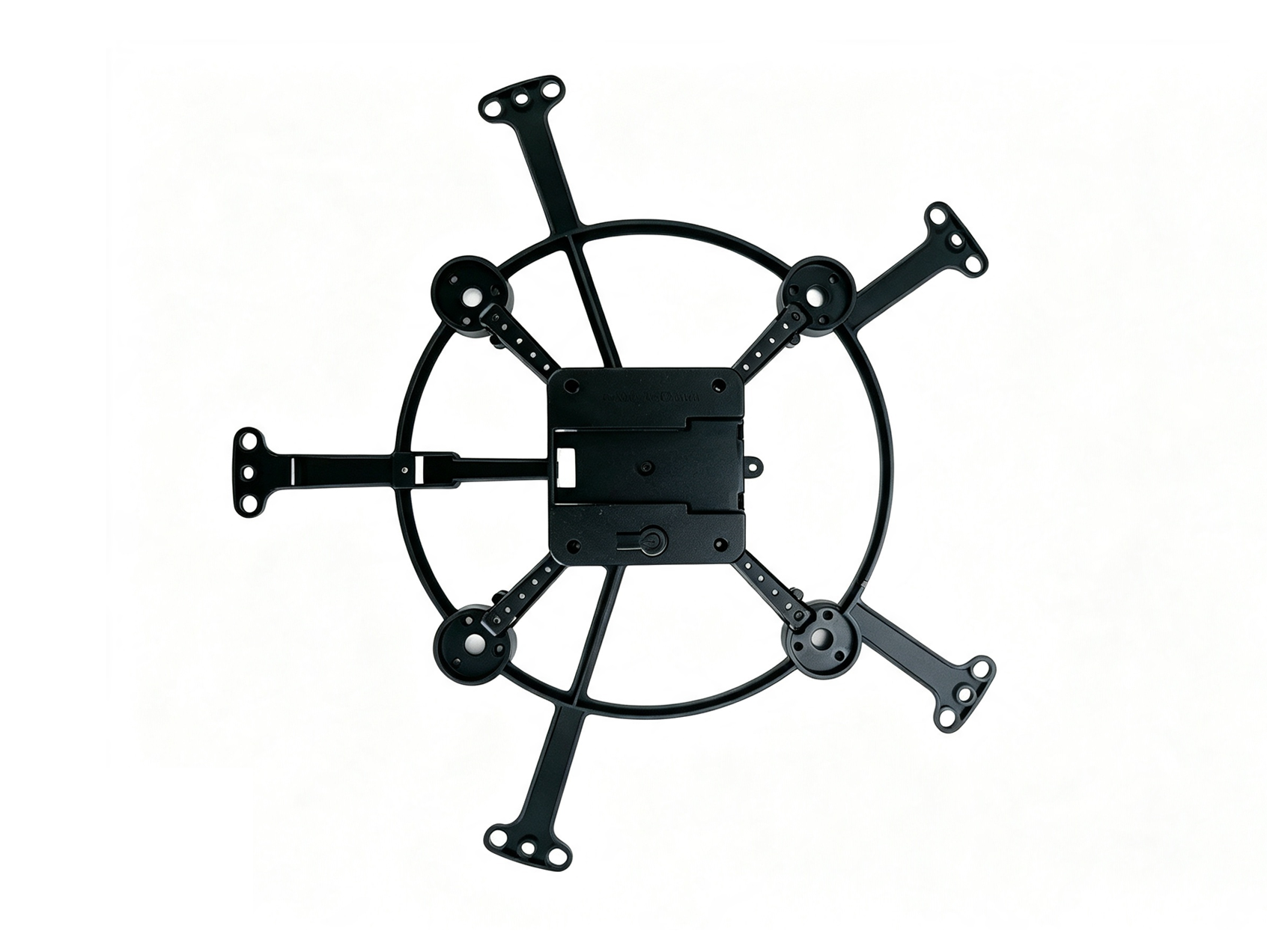
High-tensile 3K carbon fiber bottom chassis engineered for 200mm class competitive flying soccer balls. Resists high-G longitudinal shock.
Engineered for high-velocity collision containment, rapid field maintenance, and structural rigidity across competitive Class 20 (F1A) and Class 40 drone sports tiers.
High-tensile 3K carbon fiber bottom chassis engineered for 200mm class competitive flying soccer balls. Resists high-G longitudinal shock.
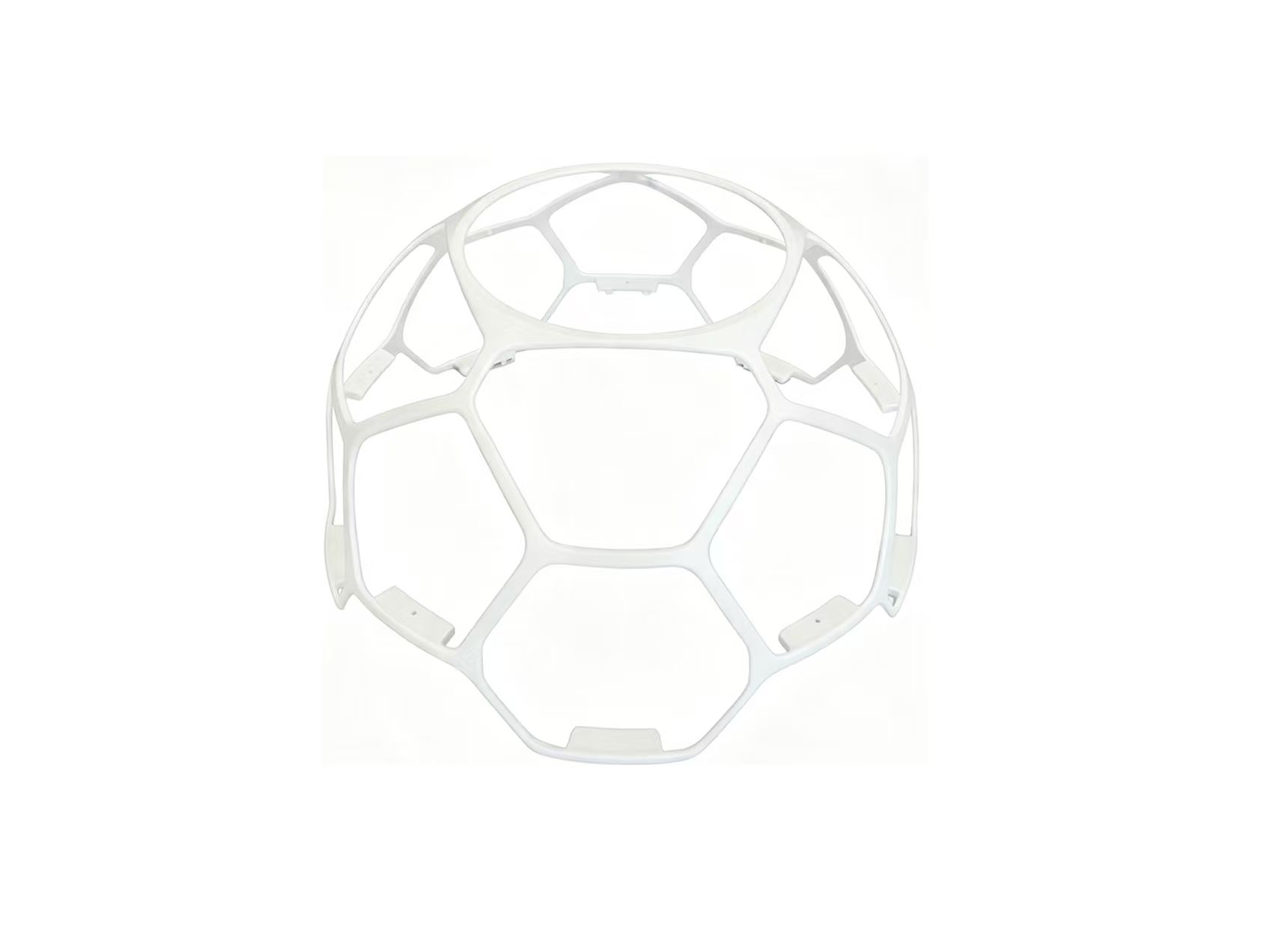
Aerodynamically vented, high-elasticity spherical exoskeleton cage designed for brutal direct strikes and defensive shielding in arena matches.
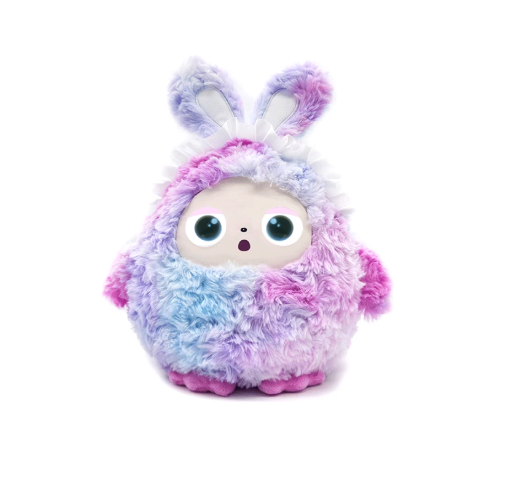
Advanced Wi-Fi voice synthesis and audio analytics board integrated into soft composite shells for training feedback and STEM robotics coaching.
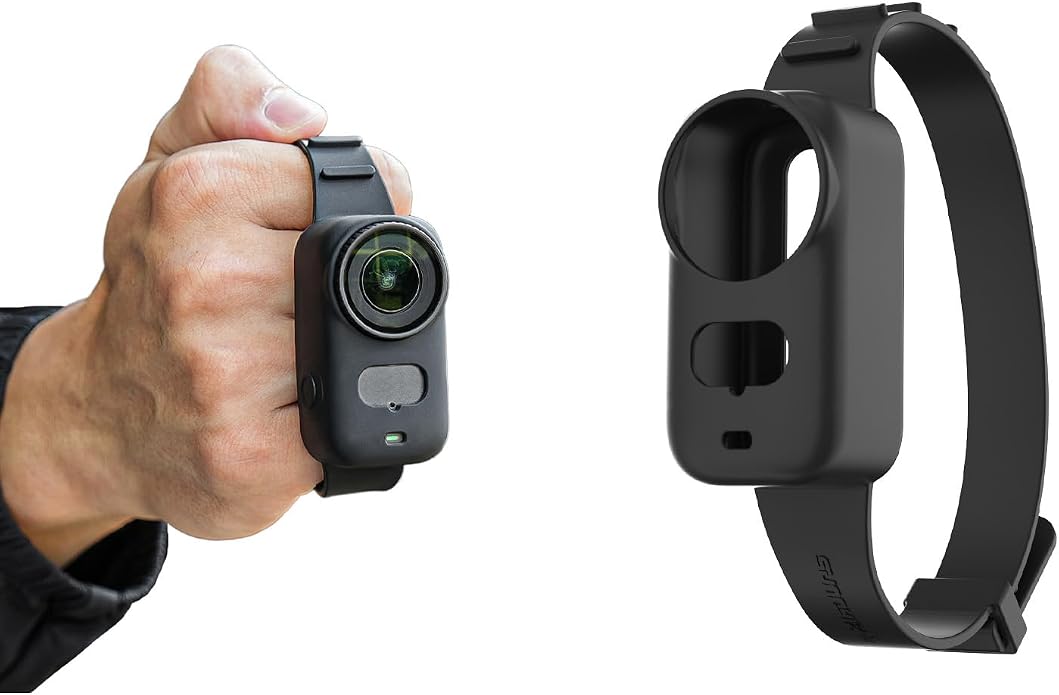
High-grade non-conductive silicone protective harness optimized for action telemetry cameras and ultra-lightweight 5.8GHz video transmitters.
Precision multi-cavity injection molded sphere ribs built to custom wall thickness tolerances. Custom branding and fluorescent colorway matching.
Center core carbon plate kit supporting 20x20mm and 25.5x25.5mm FC/ESC stacks, with integrated motor arm dampeners for 1404-2004 motors.
Optically diffuse polycarbonate rib assembly accommodating WS2812B addressable LED light strips for high-visibility referee scoring and striker identification.
Complete B2B supply package containing spherical cage halves, carbon chassis plate, CNC standoffs, motor mounting screws, and TPU battery cradle.
Combining precision mold tooling, aerospace-grade carbon composite milling, and full-lifecycle supply chain reliability from the heart of China's electronics capital.
Unlike third-party sourcing agents, Shenzhen Mardijai Technology maintains in-house high-tonnage precision injection molding machinery alongside multi-axis CNC routers. This guarantees microscopic tolerance fitting (±0.05mm) between the outer flexible polycarbonate drone soccer pentagon/hexagon cage segments and the central rigid 3K carbon fiber motor mounting plates.
Our proprietary resin compounding process enhances virgin polycarbonate with specialized elastomer tougheners, mitigating the catastrophic cage snapping common during high-speed 60 km/h defensive arena body-checks.
Accelerate your go-to-market timeline. Initial rapid prototype 3D SLS/SLA functional samples ship in 3 to 5 business days, with full-scale production batches completing inspection within approximately 20 business days.
Strategically situated near the Shenzhen Yantian deepwater port, we support global commercial terms including DDP (Delivered Duty Paid), DAP, FOB, and CIF across 50+ sovereign markets in North America, Europe, East Asia, and the Middle East, guaranteeing zero tariff headaches and predictable port clearances.
A comprehensive examination of physical stress distribution, aerodynamic thrust losses, and mechanical properties across modern competitive drone soccer airframes.
Competitive drone soccer, standardized globally under organizations such as the FAI (Fédération Aéronautique Internationale) for classes like F9A-B, exposes unmanned aerial vehicles to dynamic kinetic shock loads unmatched in traditional drone racing. In typical collegiate and professional tournaments, five aerial balls collide head-on inside mesh enclosures at velocities exceeding 16.6 m/s (60 km/h). The outer structural frame must serve a dual thermodynamic and mechanical purpose: it must flex sufficiently to dissipate kinetic impact energy over time (damping peak shock impulse to protect central LiPo batteries and sensitive IMU gyroscopes) while retaining geometric rigidity to prevent the spinning propeller tips (typically 2-inch to 4-inch props) from contacting the cage interior.
| Evaluation Parameter | Standard Commercial 3D Printed PETG/PLA | Conventional Unmodified Polycarbonate | Shenzhen Mardijai Custom Modified PC (OEM Spec) | Core 3K Twill Matte Carbon Fiber Base Plate |
|---|---|---|---|---|
| Tensile Strength (MPa) | 45 - 55 MPa | 60 - 70 MPa | 72 - 78 MPa | > 600 MPa (Axial) |
| Charpy Notched Impact (kJ/m²) | 4.5 - 6.0 kJ/m² | 25 - 35 kJ/m² | 52 - 58 kJ/m² (Extreme Anti-Fracture) | N/A (Rigid Structural Plane) |
| Density & Weight Efficiency | 1.27 g/cm³ (Brittle) | 1.20 g/cm³ | 1.18 g/cm³ (Mass-Optimized) | 1.55 g/cm³ (High Rigidity) |
| Thrust Drag Coefficient (Cd) | High turbulence (rough surface) | Moderate (solid rib geometry) | Low (Vented Aerodynamic Chord) | Zero horizontal restriction |
| Service Life Cycle (Arena Hits) | < 50 Major Impacts | ~300 Major Impacts | > 1,200 High-Velocity Collisions | Permanent Lifetime Under Normal Use |
By engineering precision mold toolings with calculated variable rib thicknesses—thicker at the high-stress equatorial ring intersection and tapered along the polar caps—our OEM drone soccer frames achieve an optimum balance of weight reduction and multi-axis crashworthiness. The central carbon plate isolates motor resonance, eliminating gyro noise jitter in betaflight flight controllers and enhancing battery endurance per 3-minute set.
Market projections indicate rapid adoption across educational institutions, e-sports federations, and consumer sports brands.
Procurement teams are moving away from glued or zip-tied cage designs. Future procurement contracts increasingly mandate field-replaceable interlocking modules where damaged cage ribs can be swapped out in under 45 seconds without desoldering electronics.
Global distributors are dividing inventory strategies into two distinct volume buckets: budget-conscious, high-volume 20cm (Class 20 / F1A) educational training kits for secondary schools, and high-performance 40cm (Class 40) pro tournament airframes made with customized composite matrices.
With stringent European Union eco-design mandates and RoHS compliance audits, B2B buyers now request post-industrial recyclable polycarbonates that maintain drop-test integrity without toxic halogenated flame retardants.
How aerodynamic simulation (CFD) and active sensor telemetry integration are transforming spherical frame design.
Early-generation drone soccer frames were often adapted from basic spherical toy quadcopters, suffering from poor air circulation, propeller wash recirculation, and rapid battery overheating. As the sport gains international recognition with official international cup circuits, technological advancement has shifted towards computational fluid dynamic optimization.
Furthermore, the convergence of high-intensity LED telemetry directly into the injection mold matrix allows real-time visual signaling without sacrificing structural durability. Embedded cable raceways prevent loose silicone wires from snagging on competitor cage nodes during mid-air entanglements.
Actionable answers to technical, commercial, and logistical inquiries directly from our engineering team.
For ready-to-ship standard colors in our proven 20cm (Class 20 / F1A) format, our MOQ starts at just 100 units. For fully customized private-label production—including custom Pantone frame coloration, laser-etched carbon fiber base plates, and branded retail packaging—our standard production MOQ is 500 units per mold configuration.
Yes. Our engineering division designs specifically to official FAI sporting codes for Class 20 (outer diameter between 200mm ± 10mm, weight under statutory caps) and Class 40 (outer diameter between 400mm ± 20mm). All mounting patterns natively support standard flight controller stack configurations (16x16mm, 20x20mm, and 25.5x25.5mm whoop/toothpick AIO boards).
Rapid prototype tooling (steel-insert aluminum molds or SLA/SLS verification models) takes 7 to 10 working days. Full mass-production multi-cavity hardened steel injection molds take 25 to 30 calendar days. Once tooling is finalized and samples are client-approved, standard mass production batches ship within approximately 20 days.
We employ a dedicated internal team of 11 to 20 QC inspection technicians. Every batch undergoes rigorous quality control checks: incoming raw polymer melt index verification, spectrophotometer color matching, high-speed pneumatic drop-impact testing from 3 meters onto concrete, and motor-resonance vibration tests on our carbon fiber bottom base plates prior to container loading.
We provide comprehensive export support out of Shenzhen Yantian Port. We regularly fulfill orders on DDP (Delivered Duty Paid), DAP, FOB, and EXW terms, working directly with global logistics partners like DHL, FedEx, air-freight forwarders, and ocean container carriers to clear customs smoothly in your destination port.