OEM/ODM Kids AI Robots · Samples Available for Qualified B2B Buyers
An Adjustable Silicone Wrist Strap may look like a simple molded accessory. In practice, fit, surface finish, clasp security, and print durability all affect its performance. Buyers also need to compare sample quality with production consistency. Small differences matter when thousands of units must feel and look alike.
The wider material market offers useful context. Grand View Research estimated the global silicone market at USD 18.5 billion in 2022 and forecast a 6.4% compound annual growth rate from 2023 to 2030. That figure covers silicone products broadly, not wrist straps alone. It signals a growing materials sector, but it cannot confirm a supplier’s quality. Ask for relevant product samples and clear specifications.
This guide introduces ten suppliers for buyers comparing custom options, order quantities, lead times, and quality controls. Look for details such as strap length, thickness, color matching, mold capability, and packaging. Request written confirmation of material grade and inspection procedures. Then compare quotations on the same requirements. No supplier fits every project. A low unit price can hide a costly compromise, and a polished sample may not represent every batch. Verify the details before committing.
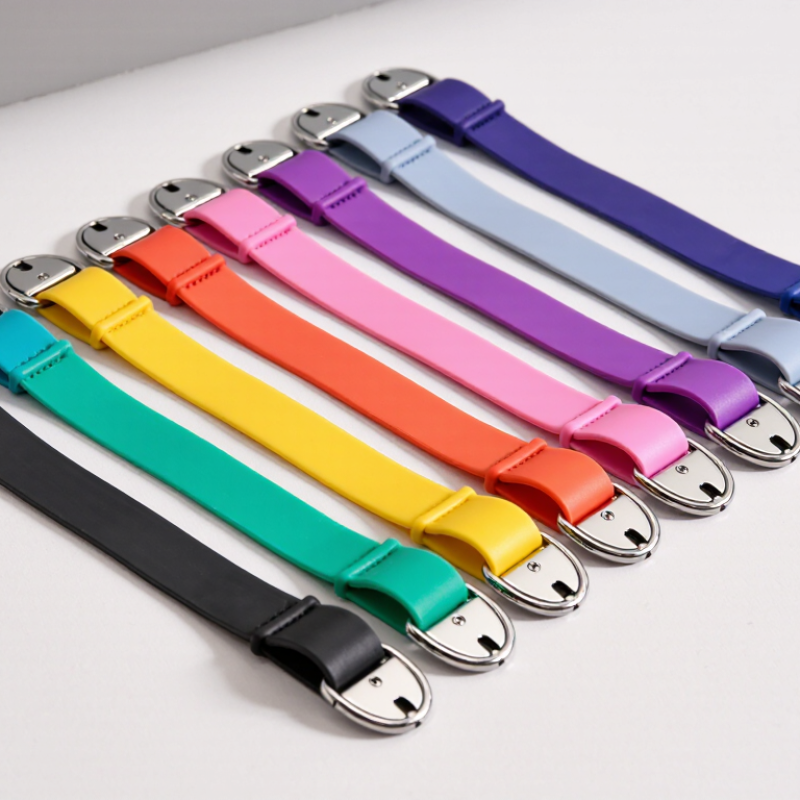
An adjustable silicone wrist strap uses holes, a buckle, or a sliding keeper to fit different wrists. It can secure a fitness sensor, event pass, or identification tag. Silicone is flexible, easy to wipe, and generally suited to everyday contact with sweat and splashes. Still, strap quality depends on material grade, finish, and clasp design. A sample may feel soft in the hand but rub during a long walk. Fit matters.
IDC’s Worldwide Quarterly Wearable Device Tracker reported 537.9 million wearable-device shipments in 2024, a 6.1% increase from 2023. That figure covers devices, not replacement straps, so it signals a larger ecosystem rather than strap demand. Counterpoint Research’s Global Smartwatch Shipments Tracker, however, reported a 7% decline in smartwatch shipments in 2024. Numbers need context: wearables do not all follow the same trend.
For buyers, practical checks include strap length, adjustment increments, clasp security, and cleaning instructions. Measure wrists with a flexible tape, then compare the range with the intended wearer group. For active use, a secure fit matters, but overtightening can leave pressure marks. Ask suppliers how they test buckle strength and material consistency across production batches. There is no perfect fit for everyone; everyday comfort is harder to judge than a specification sheet suggests.
Understanding Adjustable Silicone Wrist Straps and Their Uses
Silicone wrist straps are commonly selected for flexibility, water resistance, and comfort in everyday wear, events, and identification applications. This chart shows representative operating-temperature ranges for silicone rubber grades that may be used in products; it is not a wrist-strap certification or a supplier comparison. Actual limits depend on the compound and product design, so confirm specifications with the manufacturer.
When evaluating adjustable silicone wrist strap suppliers, look beyond a smooth finish. Ask what silicone formulation they use and request samples from a standard production run, not only a polished showroom piece. Check for sharp edges, sticky residue, strong odor, and uneven color. Fit matters. Test the adjustment range on different wrist sizes, and note whether the strap slips during repeated movement. A buckle or slider should feel secure without pinching skin.
Reliable suppliers can explain how they control dimensions, color matching, and batch consistency. Ask for inspection criteria, material documentation, and relevant test reports; confirm that each document applies to the product you plan to order. Ask how defects are handled and whether replacement parts or revised samples are available. Lead time matters too. Get production and shipping estimates in writing, including minimum order quantities and packaging details. A low quote can hide costs in custom tooling or freight. It is easy to overvalue a fast reply, though; clear answers and consistent samples are better signs. Compare two or three samples under the same conditions, such as after bending the strap repeatedly and wiping it with a damp cloth. Small differences can reveal a lot.
These ten profiles reflect common supplier specializations, not a verified ranking. Confirm each supplier’s capabilities through samples, specifications, and current quotations. An OEM-focused molder may offer custom dimensions and tooling for large orders. A small-batch supplier can suit trial runs, though unit costs may be higher. Samples matter. A color-focused producer may match silicone shades across repeat orders, but buyers should request physical swatches.
A supplier specializing in adjustable closures may provide buckle, slot, or sliding designs for different wrist sizes. Fit varies. A broad-size-range producer can help serve varied users, provided its sizing chart includes actual measurements. A custom-printing supplier may support logos or simple graphics; ask how designs hold up after repeated stretching. A quality-focused workshop should share inspection steps and material details, not just attractive product photos. Look closely.
A rapid-prototyping supplier may revise a sample quickly, while mass-production timing can differ. A packaging specialist can prepare straps for retail display or bulk shipment. An export-oriented supplier may offer clearer shipping documents and communication, but service still needs checking. A sustainability-focused producer may discuss recycled packaging or material options; request evidence before relying on claims. A polished catalog can still hide uneven sizing. Compare sample fit, surface finish, adjustment strength, lead time, and defect handling before choosing.
When comparing ten adjustable silicone wrist strap suppliers, look beyond catalog photos. Ask how each controls strap thickness, buckle fit, and silicone hardness. A sample should feel flexible without stretching loose after repeated adjustments. Small details matter. Check whether the supplier can provide material specifications and a production sample before a larger order. A polished sample is useful, but it may not reveal how the strap performs after weeks of wear.
Customization can include strap length, color, surface texture, buckle style, and printed or molded markings. Request color references and confirm whether the same shade can be maintained across production batches. For example, a bright blue strap may look different under warehouse lighting than in a product photograph. Some suppliers offer more options but require higher minimum quantities. That trade-off is easy to overlook. Ask which changes affect tooling, setup time, or the sample schedule.
Compare pricing using the same order quantity, material requirements, and packaging details. A low unit price may exclude sample fees, tooling, or shipping. Request an itemized quotation and a realistic production timeline. Lead times can change when custom colors need approval, so build in room for revisions. One imperfect sample should not automatically disqualify a supplier, but repeated fit issues deserve attention. A clear written specification makes quotes easier to compare and reduces avoidable surprises.
Buyer comparison framework. Supplier capabilities, certifications, minimum order quantities, lead times, and prices vary by product and must be confirmed directly with each supplier. No supplier-specific claims or unverified prices are included.
| No. | Comparison Dimension | What Buyers Should Compare | Evidence to Request | Pricing Considerations |
|---|---|---|---|---|
| 1 | Silicone Material | Ask which silicone formulation is offered and whether it suits the intended use, such as general promotional wear or repeated skin contact. | Material specification, technical data sheet, and any relevant test reports for the exact product. | Material grade, color, finish, and testing requirements can affect the quoted price. |
| 2 | Adjustable Design | Compare adjustment mechanisms, available size ranges, fit, and how securely the strap stays adjusted during use. | Samples, dimensioned drawings, and details of the adjustment and fastening design. | Custom mechanisms or tooling may add setup costs; confirm whether these are one-time or recurring charges. |
| 3 | Dimensions and Fit | Check strap length, width, thickness, and whether the design accommodates the intended wearer range. | Product drawings with tolerances and a pre-production sample for fit checks. | Non-standard dimensions may require custom tooling or a separate production setup. |
| 4 | Color Options | Confirm available standard colors, custom color matching, and color consistency between production batches. | Physical color samples or an agreed color reference, plus the supplier’s color-approval process. | Custom colors may have minimum order requirements or incur color-matching charges. |
| 5 | Logo and Decoration | Compare molded, printed, or other offered decoration methods for the required artwork and expected wear conditions. | Artwork requirements, decoration proofs, and a sample made using the proposed process. | Decoration method, number of colors, artwork preparation, and setup can affect unit and setup costs. |
| 6 | Tooling and Customization | Ask whether the supplier can produce a custom shape, profile, or fastening design and who owns the tooling. | Written tooling scope, ownership terms, revision policy, and sample approval procedure. | Request tooling charges separately from unit pricing and clarify charges for later design changes. |
| 7 | Minimum Order Quantity | Compare minimum quantities for standard designs, custom colors, and custom tooling orders. | A written quotation showing quantity breaks and any separate minimums by color or design. | Compare the total order cost at the same quantity; a lower unit price may require a larger order. |
| 8 | Quality Control | Ask how dimensions, appearance, color, fastening, and decoration are checked before shipment. | Quality-control procedure, agreed acceptance criteria, and inspection or defect-handling terms. | Third-party inspection or additional testing may be quoted as a separate cost. |
| 9 | Production and Sample Lead Time | Compare sample and production timelines, and confirm when the schedule begins after artwork and specifications are approved. | A written schedule covering sampling, approval, production, and dispatch. | Ask whether expedited production or sample delivery carries an extra charge. |
| 10 | Packaging, Shipping, and Quotation | Compare packaging options, shipping terms, destination, and what is included in the quoted total. | An itemized quotation stating currency, validity period, shipping terms, packaging, and any applicable charges. | Compare landed-cost estimates on the same quantity, destination, shipping method, and trade terms. |
Choosing among adjustable silicone wrist strap suppliers starts with evidence, not polished catalog photos. Request a production sample and compare it with the written specification. Check the strap’s length, width, thickness, and adjustment range using simple measuring tools. Ask the supplier to state the silicone grade and hardness, such as a Shore A value. Test the clasp or button repeatedly; it should stay secure without requiring excessive force. Ask for relevant material and performance test reports, then confirm their dates, scope, and issuing laboratory. A certificate alone proves little if it does not cover the exact product.
Inspect more than the sample. Ask how the supplier controls color consistency, molding defects, and dimensional variation between batches. Request clear answers about minimum order quantities, lead times, packaging, and replacement procedures for defective goods. If possible, review a recent production record or arrange a factory audit. Small details matter. Compare the supplier’s replies with actual documents, not promises made in a call. You may need to revise your checklist after the first sample; that is normal. Even a careful review cannot remove every risk, so approve a sealed reference sample and agree on inspection criteria before placing a larger order.
Inspect its edges, color, odor, and surface. Check for sticky residue. Measure the strap and test its adjustment range.
Try it on different wrist sizes. Move your wrist repeatedly and check whether the strap slips, pinches, or feels loose.
Ask for the silicone grade, hardness, and relevant test reports. Confirm that each document covers the exact product being ordered.
Compare two or three samples under the same conditions. Bend each strap repeatedly, then wipe it with a damp cloth.
Get minimum order quantities, production and shipping estimates, packaging details, and defect replacement procedures in writing. Check for extra tooling or freight costs.
Ask how dimensions, colors, and molding defects are controlled between batches. Request recent production records when available. Photos are not enough.
Open and close it repeatedly. It should stay secure without excessive force or pinching skin.
Not necessarily. Ask for separate timelines for sample revisions and full production. I would not assume they match.
Approve a sealed reference sample and agree on inspection criteria. A careful review helps, but cannot remove every risk.
This guide introduces the Adjustable Silicone Wrist Strap, explaining its common uses, practical benefits, and the features buyers may want to consider when selecting one. It also outlines key factors for evaluating suppliers, including product quality, material consistency, production capacity, communication, customization options, lead times, and pricing transparency. Profiles of ten suppliers provide a structured starting point for comparing the kinds of products and services available.
Because supplier capabilities and costs can vary, buyers should compare specifications and quotations carefully rather than relying on price alone. The guide also describes ways to verify a supplier, such as requesting samples, reviewing relevant documentation, clarifying production and delivery terms, and confirming customization details before placing an order. These steps can help buyers make an informed choice that fits their product requirements, budget, and expectations for service.