OEM/ODM Kids AI Robots · Samples Available for Qualified B2B Buyers
Custom AI toys are moving from novelty products toward interactive companions, learning aids, and connected playthings. Grand View Research estimated the global toys market at USD 108.7 billion in 2023, with continued growth forecast through 2030. IDC, meanwhile, projected worldwide spending on artificial intelligence could reach USD 632 billion by 2028. That figure covers AI across industries, not toys alone, but it signals how quickly the technology is entering product design.
For global buyers, growth brings choices—and practical questions. A talking plush toy may rely on microphones, cloud services, and regular software updates. A small delay in its response can change how a child experiences it. So can an unclear privacy notice. Useful sourcing decisions go beyond a polished prototype. Buyers should examine sample performance, component availability, age-appropriate design, quality-control records, and support after shipment. Details matter.
Not every supplier can deliver the same level of engineering or production consistency. That deserves scrutiny. This guide compares manufacturers through the factors buyers can verify: customization options, AI capabilities, production experience, communication, and documentation. Ask how voice features work when internet access is weak. Request clear information about data handling and product testing. Compare a working sample with the written specifications. Reports help explain the market’s momentum, but they cannot verify an individual factory. Careful checks can. For buyers developing Custom AI toys, the right partner is not simply the one with the most impressive demo; it is the one whose claims hold up in production.
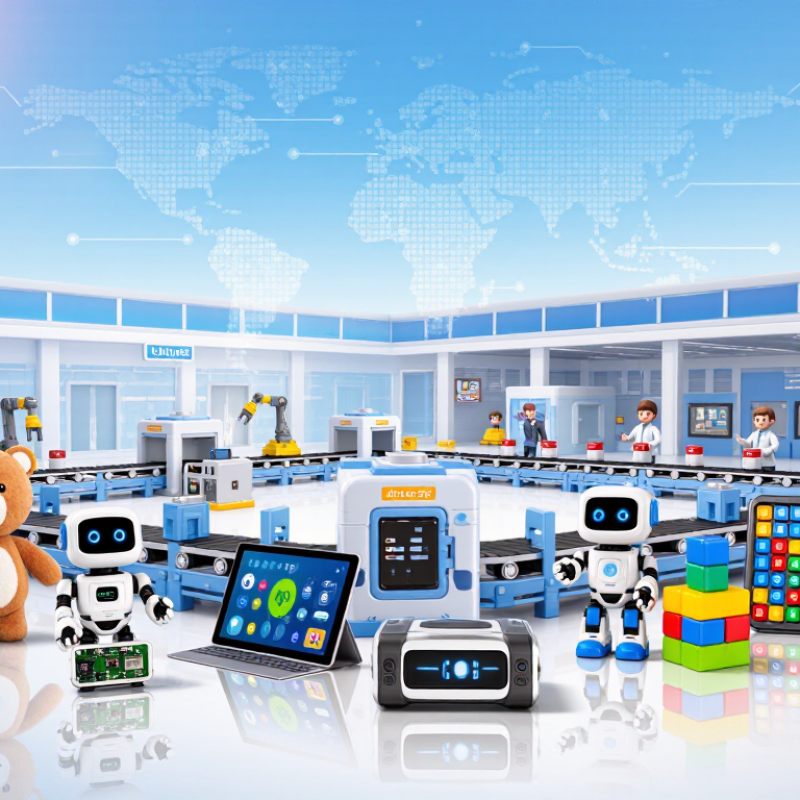
Custom AI toys combine sensors, software, and a child-friendly physical design. A microphone can capture speech, while buttons or touch sensors signal when a child wants to interact. On-device or cloud-based software interprets the input, selects a response, and plays it through a speaker. Some toys also use cameras or motion sensors, but these are not essential. The technology is not magic; noisy rooms and unclear speech can still confuse it.
For market context, Grand View Research estimated the global smart toys market at USD 15.5 billion in 2023 and projected a 13.3% compound annual growth rate from 2024 to 2030. That broad category includes more than AI toys, so buyers should treat the figure as context, not a precise forecast for one product type. Customization may cover languages, voice, story themes, response limits, and whether features work offline. Small design choices matter.
Tips: Ask suppliers to demonstrate the toy in a noisy room and explain what data it stores. Test the same question in each target language. Review the answers yourself; a polished demo can hide awkward replies. No design is perfect.
AI toys combine microphones, speakers, sensors, and software to respond to a child’s actions. Speech recognition identifies spoken requests, while language models help shape replies. Text-to-speech gives the toy a voice. Some functions run locally; others depend on a network connection. This choice affects response speed, operating costs, and how personal data is handled.
Product types vary widely. A plush companion may answer simple questions and react to a squeeze sensor. A learning robot might use wheels, cameras, or touch controls to guide short activities. Storytelling toys can adapt characters or plots to a child’s choices. In product reviews, small details matter: a clear microphone, steady volume, and a visible mute switch often shape everyday use more than flashy demonstrations. Simple can work.
For global buyers, ask manufacturers how they test recognition across accents, background noise, and different speaking volumes. Request details on update support, data storage, and what happens when Wi-Fi fails. A toy that keeps basic play available offline can be more dependable in real homes. Safety and durability also deserve hands-on checks: tug seams, press buttons repeatedly, and inspect battery access. Not every feature needs AI. Sometimes the cleverest design is the one that responds reliably, then lets the child lead.
Custom AI toy development starts with a play brief, not a chatbot. The team defines the toy’s age range, play pattern, voice, and limits before selecting hardware. A plush character may need a soft microphone, clear speaker, and simple controls; a tabletop robot may need sensors and stronger battery capacity. Circana’s 2023 U.S. toy industry report recorded an 8% sales decline, to $40.2 billion. That result is a reminder that added technology must earn its place through useful, durable play. Prototype early.
Next, engineers connect the model, microphone, speaker, and firmware, then test them together in noisy rooms and small hands. They measure response time, battery life, speech recognition, and whether children can understand the toy’s replies. Designers also decide what information is processed, retained, or deleted, and test failures such as weak Wi-Fi or misheard words. The NIST AI Risk Management Framework recommends identifying and managing risks throughout an AI system’s lifecycle, a useful discipline for toy development. One awkward truth: a clever demo can still make a frustrating toy. Repeated playtests often expose that gap, so teams revise the interaction before committing to tooling and production.
Indicative development time by project stage (weeks)
Typical planning estimates vary with product complexity, tooling needs, and safety testing requirements. Stages may overlap; certification and production schedules should be confirmed with the manufacturer.
Global buyers should evaluate an AI toy manufacturer beyond appearance and quoted price. Ask how the toy handles noisy rooms, accents, interrupted speech, and unanswered questions. Request a working sample, then test it with children’s typical phrases and several days of repeated use. A polished demonstration is not enough. Check whether the manufacturer can explain the toy’s data handling, provide clear safety and quality documents, and describe its production checks. Details matter.
Tips: Compare sample performance with written specifications. Ask for test records, production timelines, minimum order quantities, and defect-handling procedures. Confirm who maintains software features after shipment. Keep answers in writing; vague promises are hard to verify.
Customization also deserves close inspection. A new voice, language, or character response may change how the toy performs, so request a revised sample before approving production. Check battery life during active play, charging behavior, speaker clarity, and how easily caregivers can adjust settings. These checks take time. They can also reveal gaps in the buyer’s own brief: requirements may be unclear until a prototype is in hand. A reliable supplier should welcome specific questions and explain limitations honestly, rather than promising that every feature will work perfectly.
Custom AI toys require the same physical safeguards as ordinary toys, plus careful control of microphones, cameras, and stored data. The U.S. Consumer Product Safety Commission’s 2023 report estimated 145,500 toy-related emergency-room injuries among children aged 12 and younger in 2022. That figure makes small parts, battery compartments, seams, and pull strength worth checking on production samples—not only in design files. The European Commission’s Safety Gate 2023 report recorded 3,412 alerts across product categories, with toys among the frequently notified groups. A certificate alone is not the whole story.
For global sourcing, ask manufacturers to identify the standards and test methods applicable in each destination market, such as EN 71, ASTM F963, or ISO 8124 where relevant. Confirm that reports match the exact materials, age grading, and production version being ordered. Require batch traceability and written approval before component substitutions. For connected features, request a data-flow diagram, clear retention limits, and evidence that unnecessary collection is disabled by default. Small details matter. A tidy audit folder can still miss a factory change made after testing; independent sample checks help expose that gap. Build time for retesting, translated instructions, and shipment-document review into the sourcing schedule.
| Evaluation Area | What Buyers Should Check | Relevant Requirements or References | Evidence to Request | Sourcing Action |
|---|---|---|---|---|
| Age grading and intended use | Confirm the intended age range, foreseeable use, supervision needs, and whether the product is marketed as a toy. | Applicable toy rules and test requirements depend on product design, age grading, and sales market. | Product specification, age-grading rationale, risk assessment, and draft packaging. | Agree on the intended age range before design freeze and testing. |
| Mechanical and physical safety | Review small parts, sharp edges, seams, cords, moving parts, sound levels, and foreseeable breakage. | United States: ASTM F963 requirements are incorporated into 16 CFR Part 1250. European Union: relevant EN 71 standards may apply to demonstrate toy safety. | Test reports for the final product configuration and records of design changes. | Check that reports cover the exact model, materials, and age grading being ordered. |
| Chemical safety and materials | Identify materials, coatings, inks, plasticizers, and accessible components that may be subject to chemical limits. | United States: applicable CPSIA limits and testing rules. European Union: applicable toy-safety and REACH restrictions. | Material declarations, bill of materials, and relevant accredited-laboratory test reports. | Require approval before any supplier substitutes a material or coating. |
| Electrical safety and batteries | Check charging method, accessible electrical parts, battery access, temperature rise, and protection against short circuits. | Requirements depend on the product and destination. IEC 62133-2 may be relevant to portable sealed lithium cells; UN 38.3 testing applies to lithium-battery transport. | Battery specifications, applicable safety reports, transport test summary, and charging instructions. | Confirm battery type and shipping configuration before quoting freight or delivery dates. |
| Wireless and radio functions | List every radio feature, frequency band, antenna, and wireless module in the finished toy. | United States: FCC rules, including Part 15 where applicable. European Union: Radio Equipment Directive 2014/53/EU may apply. | Radio test reports and module documentation matching the final antenna and enclosure configuration. | Assess the complete finished product; module documentation alone may not establish finished-product compliance. |
| Voice, image, and personal data | Map what the toy collects, where data is processed or stored, retention periods, and how deletion works. | United States: COPPA may apply to covered services collecting personal information from children under 13. European Union: GDPR applies where relevant; the age for a child’s consent to certain online services varies by member state. | Data-flow diagram, privacy notice, retention and deletion policy, and details of service providers and data locations. | Review the full app and cloud-service workflow, not only the physical toy. |
| AI behavior and content controls | Test age-appropriate responses, speech recognition limits, escalation behavior, content filters, and failure modes. | Applicable consumer-protection, privacy, and product-safety obligations depend on the product and target market; no single general AI-toy certificate replaces those checks. | Documented test cases, content-safety process, update policy, and procedures for reporting and correcting issues. | Run scenario testing in each supported language and define who controls software updates. |
| Labels and technical documentation | Check warnings, traceability details, instructions, importer information, and language needs for each destination. | United States: children’s products subject to applicable rules generally require a Children’s Product Certificate supported by required testing. European Union: applicable toys require CE marking and supporting conformity documentation. | Draft labels, instructions, certificate or declaration documentation as applicable, and traceability plan. | Approve destination-specific artwork before mass production. |
| Factory quality and change control | Evaluate incoming-material checks, production controls, final inspection, defect handling, and control of subcontractors. | Quality-system certificates can inform supplier assessment but do not replace product-specific regulatory testing or market authorization. | Quality procedures, inspection records, corrective-action process, and written change-notification terms. | Use a pre-production sample and define approval requirements for component, firmware, and factory changes. |
| International sourcing and logistics | Confirm manufacturing location, production capacity, lead-time assumptions, export documents, and responsibility for freight and import clearance. | Customs classification, duties, importer obligations, and shipping restrictions depend on the product and destination. Lithium batteries are subject to transport requirements. | Written quotation, agreed Incoterm, packing details, production schedule, and applicable shipping documents. | Verify the named delivery place, importer of record, and responsibility for compliance costs in the contract. |
Note: Requirements vary by product design, age grading, and destination. Verify current rules and applicable standards for each market; this table is a sourcing checklist, not legal advice or a supplier certification.
It combines a child-friendly design with sensors and software. It may respond to speech, touch, or movement.
A microphone can capture speech. Software interprets it, then a speaker plays a response. Noisy rooms matter.
No. Some features work offline, while others rely on a network. Ask what still works when Wi-Fi fails.
Try a working sample with common phrases, different accents, and background noise. Repeat the tests over several days.
Test microphone clarity, speaker volume, battery life, and the mute switch. Small details matter.
Ask what information the toy stores, where it is processed, and how settings can be adjusted. Get clear answers in writing.
Request a revised sample after changing its language, voice, or story responses. A new voice may affect performance.
Review safety and quality documents, test records, production timelines, and defect procedures. Vague promises are hard to verify.
No. One estimate placed the broader smart toys market at USD 15.5 billion in 2023. That category includes more than AI toys.
No. Unclear speech can confuse it, and some replies may feel awkward. I still wonder how well it handles real play.
Custom AI toys combine interactive hardware with intelligent software to respond to a child’s voice, actions, or play patterns. Depending on their design, they may use sensors, microphones, speakers, cameras, connectivity, and AI models to support conversation, storytelling, learning, or responsive play. Manufacturers can tailor these features, the toy’s appearance, language options, and companion applications to suit different audiences and markets.
Developing Custom AI toys typically involves defining the product concept, selecting appropriate technologies, building prototypes, and refining the design through testing. Global buyers can compare manufacturers by reviewing their engineering capabilities, customization process, production quality, communication, and ability to scale. They should also assess child safety, privacy protections, age suitability, material quality, and applicable market requirements. Clear documentation, reliable quality checks, and careful coordination across sourcing and shipping help buyers bring a well-designed product to international markets.